
Remember the 1990s?
A glimpse from the Commanding Heights

Dear Readers,
Earlier this month I ventured into Boston to attend a couple of events that took me into more rarefied air than I am used to these days. I attended a lunch with former colleagues I worked with in the 1990s, which was held at the University of Massachusetts Club, on the 32nd floor of the One Beacon building near Beacon Hill. And that evening, I ascended to the State Room on the 33rd floor of the tower at 60 State Street for a swanky event with these colleagues and a larger group of distinguished Bostonians.
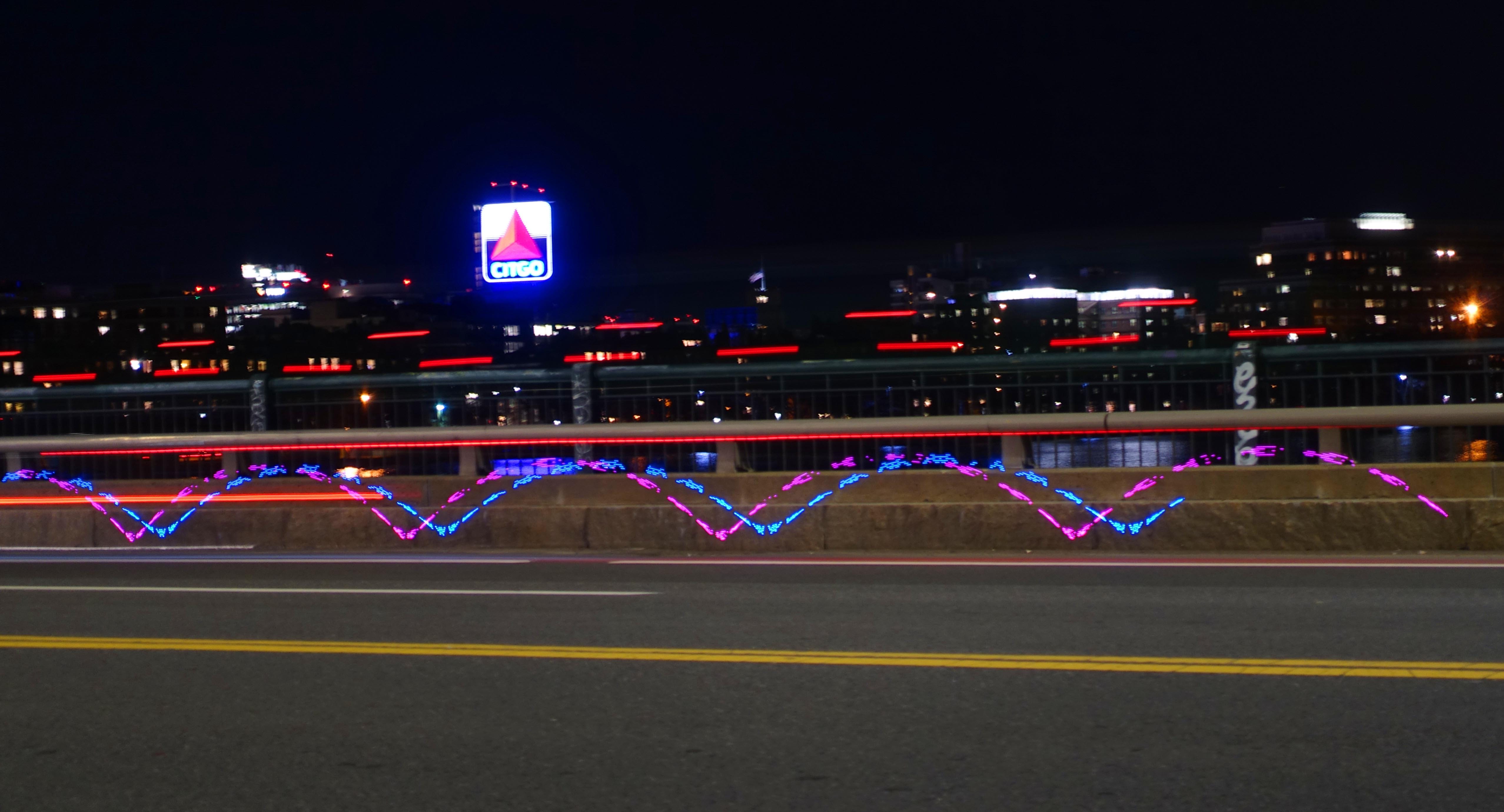
At both events I took a moment to appreciate the panoramic views of the city—I’m grateful not to be acrophobic—and the landmark that immediately caught my eye was the CITGO sign at Kenmore Square. There are so many vantage points to regard that sign, including any of the seats at Fenway Park that give you a view over the Green Monster rising up beyond left field. Some years ago, I walked home from the ballpark and many Smoots onto the MIT bridge I stopped to take pictures, fascinated with the way the lights of the cars and bicycles and the distant winking sign registered on my camera.
Now comes news that the sign will be dark for the next six months. The Boston Globe reports:
The 125,000-pound structure will be taken apart piece by piece, first with the existing letters and logos, by crews from Suffolk Construction. After cleaning, repainting, and repairing the sign — which measures 60 feet by 60 feet, each letter 11 feet high — it will be reinstalled on a new steel superstructure 120 feet away from its current spot. . . .
This won’t be the first time the sign has temporarily disappeared from the nighttime city skyline. It was shut off from 1979 into 1983 because of the “second energy crisis,” after the Iranian revolution, when oil prices doubled to $100 a barrel. It was lit up again on an August night in 1983, during the seventh-inning stretch of a game between the Red Sox and the Texas Rangers. Fans gathered outside the ballpark, and loudspeakers played Debby Boone’s 1977 hit “You Light Up My Life.” (She is the daughter of Pat Boone and if you’re too young to know who he is, consider yourself lucky.)
I didn’t live in Massachusetts then; I discovered these historical facts after my late-night photo shoot caused me to look into the sign’s history. It seemed strange that so many of us felt a sentimental attachment to a corporate logo—for an oil company, no less! A further complication was that the Southland Corp., owner of 7-Eleven stores, which had purchased Citgo in the 1980s, had by 1990 sold the company to the national oil company of Venezuela. Things did not go well for the Venezuelan oil barons. I tried to sort some of this out in a short piece for the Boston Globe Magazine in 2018.
The economics were a mess then and have only become stranger this year, since the U.S. government decided to remove Nicolás Maduro from power in Venezuela and our belligerent president claimed “they took our oil away from us.” The oil reserves, of course, are the property of Venezuela; Trump intentionally conflated the nationalization of oil company assets with ownership of natural resources. Now it looks like the Citgo Petroleum company, with its U.S.-based refineries, will soon be owned by a bunch of high-powered American oil industry execs who’ve formed a company called Amber Energy. What a relief! These execs have ambitious plans to spend $1 billion expanding a refinery in Corpus Christi, Texas, which means “generating up to 1.9 billion gallons a year of gasoline, diesel, jet fuel and other refined products,” according to an op-ed in the Wall Street Journal.
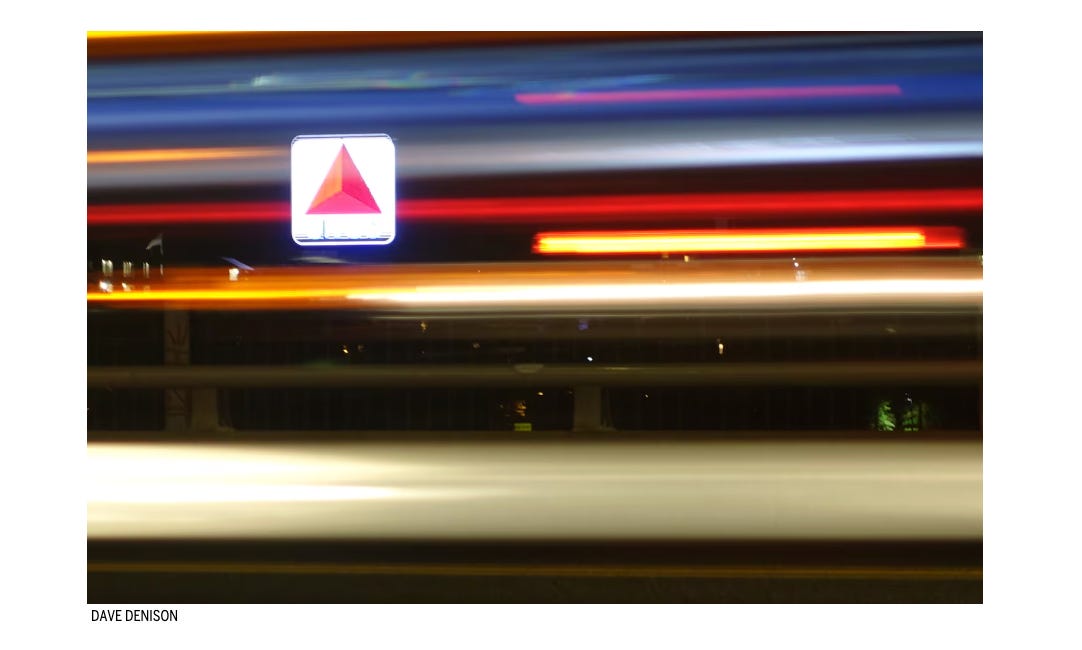
So . . . we can rest assured, as we admire our cherished Boston landmark, that Citgo under competent leadership will be doing its part to continue to burn up the planet. I tried to justify my affection for the Citgo sign, when I wrote about it for the Globe, by imagining the sign as pop art that was symbolic of something other than oil. The editors made my day by including one of my photographs. I mused:
What would it be like if that blinking red delta existed only as a giant work of public art? What if its existence didn’t depend on the rising and falling fortunes of developers and oil companies? One photo I took that night captured the sign just when the white background was fully lit up. The five blue letters at the bottom had disappeared into the white. That’s the image I like best.

The event that drew me to Boston was the 30th anniversary celebration of the Massachusetts Institute for a New Commonwealth. I signed on in 1996 with this group because they wanted to set up a nonpartisan think tank and a quarterly magazine. Two ambitious leaders, Tripp Jones and Mike Gritton, backed by the philanthropist Mitchell Kertzman (and later Chris Gabrieli) got the think tank going and hired me to edit the publication, which became CommonWealth magazine. (“Politics, ideas, and civic life in Massachusetts.”)
In Boston this month I got to spend time again with these two characters, Tripp and Mike, and several other former colleagues. It struck me that they’ve all found ways to work at jobs over the last three decades that, in some way or another, improved the world around them in direct and tangible ways. That can be a little humbling to a lifelong scribbler, who mostly stays on the sidelines and, um, makes observations about what seems to be happening.
Well, anyway. CommonWealth’s work continues as the re-branded CommonWealth Beacon, which is led by the talented Laura Colarusso, formerly the editor of Nieman Reports. They’ve got a weekly podcast, which is called the Codcast. Laura invited me on a couple of weeks ago to talk about the early days of CommonWealth, and what we thought we were up to. It was a fun conversation, and it took me back to what a different world it was, politically, back in the 1990s. If you make time in your life for podcast chatter, why not dial this one up? You can read about it here or go right to it here.
Yes, the 1990s. . . Being devoted to political journalism, I had a lot of criticisms of the ways the system, even in Massachusetts, was falling short of fundamental democratic ideals. What seems so different about those times now, though, is that we made criticisms with some semblance of hope for the future. There was an upsurge in optimistic thought about “civic engagement” and “citizen journalism” and how maybe we were moving toward the kind of creative forward-looking surge the United States saw in the great Progressive Era at the dawn of the 20th century.
I never imagined politics in America would sink to the mucky, murky depths that we’re mired in now. One of the effects of living in an era of corrupt brutes like Trump and remorseless killers like Netanyahu is that one has to fight every day against a feeling of insignificance. The things we concern ourselves with—the details that make up our life—how can any of it merit discussion in a time of casual cruelty and truly monstrous figures like Trump and Vance and Stephen Miller and Elon Musk?
I keep thinking I’ll devote one of these letters to some of the frivolities of my own days—reflections on the travails of an amateur bowler, observations of a novice tree-planter, satisfactions of a devoted dog-walker. . . I mean, even as our military drops bombs on a faraway school and incinerates children, we are all still going about our business, doing our jobs, getting through the day. Things outwardly seem mostly normal. This nervousness about talking about the less important concerns, I’ve noticed, affects a lot of us who write. The New York Times columnist Nicholas Kristof wrote a perfectly compelling column about animal cruelty the other day and felt the need to interject “I’m sure some readers are wondering why I’m writing about pigs at a time when there are so many other pressing issues, from the Iran war to Ebola to President Trump’s proposed slush fund. It’s a reasonable question.” And he gave a reasonable answer.
Zadie Smith addresses the same anxiety among artists in the current issue of the New York Review of Books. Invited to make remarks to the American Academy of Arts and Letters in New York City, she wonders: “What’s the point? That’s what an old friend, another writer, asked me. By this he meant: Why talk about arts and letters when people are being gunned down in the streets? I’m going to answer the question as best I can . . .” And she gives a reasonable answer, noting the other times in history when the emergencies were just as dire, and writers kept writing and artists kept making art.
A final note: I came to a fork in the road this month—and I took the one that’s pretty heavily traveled. Which is to say, I have found a way to wriggle out of full-time job responsibilities. It was about ten and a half years ago when I took a job with The Baffler magazine, expecting it to last a year or two if I was lucky. In January I met with our publisher Noah McCormack and told him I was ready to move on to a new occupation, like custodian of the trees and walker of the dogs in Northampton, Mass. He generously suggested I stay on at The Baffler in a part-time job, mostly devoted to occasional writing. So as of this month we changed my title from Senior Editor to Writer-at-Large.
That opened the way for our magazine to now hire a new associate editor and also an editorial fellow. The latter job is for someone who is starting out in journalism. We got about 550 applications for one position. This shrinking, endangered profession still has so many people who want to do this work. But don’t worry: our tech geniuses have already determined that we don’t need so much human intelligence anymore. We will cultivate artificial intelligence. Those in power who like to call journalism “fake news” are quite certain that artificial news will suit them better.
Dave! Enjoyed your stories, as usual. Congrats on the new role!
Thanks for highlighting Zadie Smith’s piece. Art’s ability to foster empathy and connections outside the dominant culture/power structures is reason enough.